See if a Wealth
Clarity Chat is
right for you.

Tariffs, Trade Wars & Your Portfolio: What You Need to Know

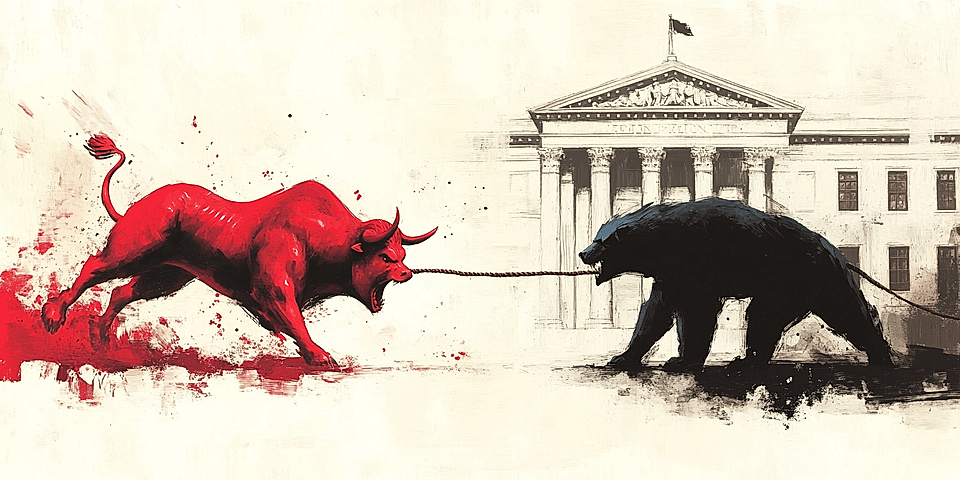
Illustration of a red bull and a black bear pulling against each other in front of a classical building.

TL;DR Answer Box

Tariffs aren’t noise, they’re a regime change. In 2025, trade friction can rewire supply chains, compress margins, and create confusing inflation + rate signals. If you’re a high earner with a stock-heavy, passive setup, the move isn’t panic-selling, it’s stress-testing concentration, adding intentional liquidity, and rebalancing for second-order effects (where capital flows after the initial shock).

Last updated: January 28, 2026

Introduction

Tariffs aren’t just political posturing. They send shockwaves through markets, force industries to pivot, stir inflation, and roil supply chains.

The brewing 2025 trade wars, involving the U.S., Canada, China, and the EU, are poised to hit key industries and corporate earnings hard.

But where most see crisis, there’s opportunity, to reposition, rethink risk, and rebalance portfolios for volatility.

Especially for high earners in tech with stock-heavy, passive strategies, this is your wake-up call.

Let’s unpack how to adapt your portfolio to global tariff disruptions.

Challenging the “Set and Forget” Approach

The old wisdom: “Stay diversified, hold index funds, ignore the noise.”

The reality? Tariffs hit global supply chains, and the S&P 500 is packed with companies deeply reliant on those chains: Apple, Tesla, Nvidia, Amazon.

These “broad” funds might not be as diversified as they seem.

So, What’s the Actual Move?

1) Look under the hood of your ETFs

Are your holdings truly diversified across sectors? Or are you simply overexposed to one macro theme (mega-cap tech, global supply chains, rate sensitivity) without realizing it?

2) Think beyond the stock market

Commodities, currencies, and inflation-protected assets can behave very differently during trade wars.

  • Gold: Often a play on weakening fiat currencies, not just a fear hedge.
  • Crypto: May seem like a hedge, but recent volatility suggests it can behave more like a risk asset than a stabilizer.

Why Inflation & Interest Rates Become Unpredictable

First-order thinking: Tariffs raise prices → Inflation goes up.

Reality: It’s more chaotic.

  • Some companies pass costs to consumers (raising CPI).
  • Others absorb costs, shrinking profits.
  • If consumers spend less, demand drops.
  • In some cases, tariffs are deflationary.

And what about the Fed? High prices would typically trigger rate hikes. But if growth slows and layoffs rise, the Fed could cut rates instead.

Key takeaway

The real risk is not just inflation, it’s market confusion over how central banks react.

What This Means for Investors

  • Inflation hedges aren’t automatic winners: TIPS and commodities can underperform if growth slows or demand collapses.
  • Cash is leverage: In volatile markets, liquidity is “dry powder” for opportunities and a buffer against forced selling.
  • Watch rate sensitivity: High-duration and high-debt sectors (often tech and some real estate) can get whiplashed by sudden Fed moves.

Making Sense of Tariffs in 2025: Don’t Overreact

Ask yourself:

  • How do I hedge risk without blowing up my long-term plan?
  • How can I use volatility to my advantage?

The first reaction to tariffs is often indiscriminate selling. Passive investors get hurt when they panic-sell, then buy back in at higher prices.

But smart investors wait, and plan.

After the dust settles

  • Some companies adapt quickly, rewiring supply chains and benefiting from subsidies or trade alliances.
  • Some countries gain capital inflow, when one economy gets hit, another often rises (e.g., Mexico, Vietnam).

Inflation surprises?

  • If rates stay high → dividend-paying stocks and cash-flow businesses can shine.
  • If rates drop due to slowdown → beaten-down growth stocks can rebound quickly.

Tariff-driven markets are about second-order effects.

Don’t panic-sell. Don’t react emotionally.

Stay fluid in your asset allocation, stocks, commodities, TIPS, cash, and understand that old diversification rules may not apply.

Think Two Moves Ahead

  • Where does capital flow after the knee-jerk reaction?
  • How can you align short-term moves with long-term goals?

Trade wars aren’t disasters, they’re reallocations of opportunity.

Those who understand capital flows amid policy shifts will turn volatility into long-term gain.

Key Takeaways

  • Tariffs can create regime shifts in margins, inflation signals, and global capital flows.
  • “Broad index” exposure can still be concentrated, check sector and mega-cap weightings.
  • Liquidity is a strategy: cash can prevent forced selling and fund opportunistic buys.
  • Expect second-order effects: winners and losers emerge after supply chains and policy responses adjust.

FAQ

Should I sell stocks when tariffs hit?

Not automatically. The goal is to avoid emotional selling and instead rebalance based on concentration, liquidity needs, and how your holdings react to margin pressure and rate changes.

Are TIPS always the best inflation hedge?

No. In tariff regimes, inflation and growth can diverge. TIPS can help in certain inflation scenarios, but they’re not a universal solution.

What’s the simplest “volatility-ready” improvement?

Define a liquidity buffer (cash/T-bills) and a rebalancing rule so you don’t improvise decisions when headlines spike.

Internal Links

CTA

If you’re stock-heavy and want a rules-based plan for tariff-driven volatility, concentration limits, liquidity targets, and a rebalancing framework, book a Wealth Clarity Call and we’ll map it into a one-page action plan.

Disclaimer

The information provided is for educational and informational purposes only and does not constitute investment advice and it should not be relied on as such. It should not be considered a solicitation to buy or an offer to sell a security. It does not take into account any investor's particular investment objectives, strategies, tax status or investment horizon. 

No investment strategy or risk management technique can guarantee returns or eliminate risk in any market environment. All investments include a risk of loss that clients should be prepared to bear. The principal risks of Tailored Wealth’s strategies are disclosed in the publicly available Form ADV Part 2A.

The views expressed in this commentary are subject to change based on market and other conditions. These documents may contain certain statements that may be deemed forward looking statements. Please note that any such statements are not guarantees of any future performance and actual results or developments may differ materially from those projected. Any projections, market outlooks, or estimates are based upon certain assumptions and should not be construed as indicative of actual events that will occur.

All information has been obtained from sources believed to be reliable, but its accuracy is not guaranteed. There is no representation or warranty as to the current accuracy, reliability, or completeness of, nor liability for, decisions based on such information and it should not be relied on as such.

Tailored Wealth and its advisors do not provide legal, accounting, or tax advice. Consult your attorney or tax professional. 

This content is for educational purposes only and is not tax, legal, or investment advice. Tax and retirement rules vary by state and change over time. Consult your professional advisors regarding your specific situation.