Frequently Ask Question
What is the best strategy for investing in volatile markets?
The best strategy is usually structural, not predictive. Fund near-term needs in stable capital, separate the rest by time horizon, and follow written rules for refills and rebalancing. That reduces the chance you will be forced to sell long-term assets during downturns.
How much cash should I keep for the next 12 to 24 months?
It depends on your fixed obligations, income stability, and upcoming known expenses. A useful approach is to quantify your non-negotiable spending plus any planned large expenses and career transition runway, then fund that layer in stable, accessible vehicles. The right number is personal and should be modeled inside your broader plan.
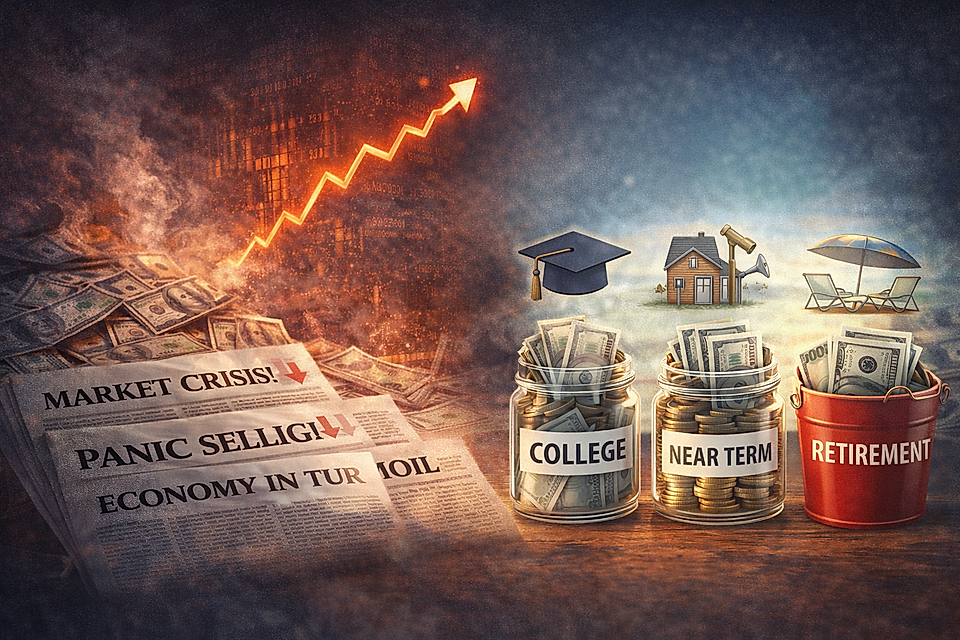
What is a bucket strategy and how does it help with volatility?
A bucket strategy separates money by time horizon so short-term needs are not exposed to long-term market risk. It helps because market declines stop feeling like they threaten every goal at once. Your long-term bucket can compound while your near-term bucket stays protected.
Should I change my allocation when markets drop?
Usually, big changes in the middle of a drawdown create more damage than they prevent. A better approach is to follow your pre-written rules: rebalance within thresholds, refill short-term buckets on schedule, and update the plan only when your life changes. If your structure is wrong, fix structure first before making reactive allocation shifts.
How do RSUs and company stock fit into a time-horizon plan?
Company stock and RSUs should have explicit rules because concentration increases volatility and raises the stakes of every downturn. Many executives benefit from a written diversification cadence, a tax-aware plan, and clear limits on single-stock exposure. In some situations, a 10b5-1 plan can make diversification more consistent and less emotional.
How often should I rebalance a time-horizon portfolio?
Many investors rebalance on a schedule (such as quarterly) and also use threshold bands to avoid over-trading. The key is consistency. Rebalancing should be triggered by rules and time, not by headlines.