Frequently asked questions
What is a hybrid retirement plan?
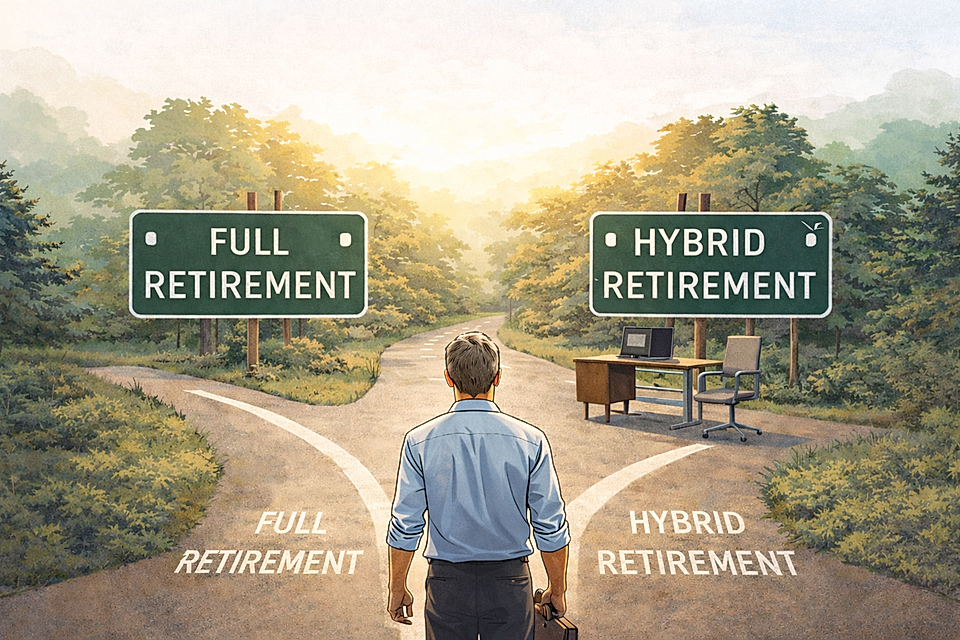
A hybrid retirement plan is a deliberate strategy to step back gradually by combining flexible work income with a structured withdrawal plan from your portfolio. It is designed to make work optional sooner while keeping your plan resilient across market and life changes.
What is a work-optional date and how do you calculate it?
Your work-optional date is when you can choose whether to work, not when you must stop. You calculate it by modeling your baseline spending, healthcare, taxes, and goals against expected income sources (flexible work, equity events, portfolio withdrawals, Social Security) with realistic guardrails.
Why can part-time income improve plan success?
Because it can reduce early portfolio withdrawals and lower sequence-of-returns risk. Even a few years of partial income can act like a runway, buying time for the portfolio to compound instead of carrying the full load immediately.
Are Roth conversions smart during phased retirement years?
They can be, especially in lower-income windows, but it depends on your tax bracket, state taxes, future income expectations, and cash available to pay the conversion tax. Roth conversions are taxable in the year completed and cannot be undone for conversions on or after January 1, 2018, so this requires careful modeling.
What are the 2026 Social Security earnings test limits?
For 2026, the annual exempt amount is $24,480 for people who will not reach full retirement age in 2026. For people reaching full retirement age in 2026, the annual exempt amount is $65,160 for earnings before the month full retirement age is reached. Benefits withheld are not permanently lost, but timing still matters.
How do I plan healthcare before Medicare?
You need a bridge strategy for the years before Medicare eligibility, which may include marketplace plans, COBRA, a spouse plan, or other options. Because healthcare costs and subsidy eligibility can interact with income planning, it should be modeled, not assumed.
How should high earners think about equity compensation during the transition?
Equity comp can create both opportunity and concentration risk. A good approach is to integrate vest schedules and diversification rules into the hybrid timeline, potentially using structured selling (such as a 10b5-1 plan, if appropriate) so the transition is supported by a strategy instead of last-minute decisions.